
China & Myanmar
The Ultimate Resource
for Diplomats and Business Leaders

Bilateral Similarity Index BSX:
55.5%

Are you aware that China and Myanmar have the highest similarity in geographic indicators?
Explore 40 areas of comparison in our specially crafted 300-page, full-color hardcover report!

Geography as China's Cornerstone
China's geographic features position it as a global economic and geopolitical player. With the second-largest landmass and a staggering 22,457 kilometers of land borders, China's vastness offers immense strategic advantages.

Geographical Features of Myanmar
Nestled at the heart of Southeast Asia, Myanmar stands out for its striking natural tapestry, occupying the 39th position globally in terms of landmass at 652,670 square kilometers. The nation boasts a remarkable position between the Bay of Bengal and the Andaman Sea, which has gifted it with the 20th longest coastline globally, stretching an impressive 1,4708 kilometers.

China's Economic Powerhouse
China's economy towers over the global landscape as a formidable force, its vast scale and impressive growth rates redefining international trade and development. Boasting the world's highest GDP, China stands as the engine of global economic activity, with its GDP per capita continuously rising.

Myanmar: Economic Resilience
Myanmar's economy exhibits notable resilience and long-term growth potential, despite facing recent challenges. Its large GDP and GDP per capita in purchasing power parity (PPP) terms reflect the country's fundamental economic size and population.

Leadership Timeline

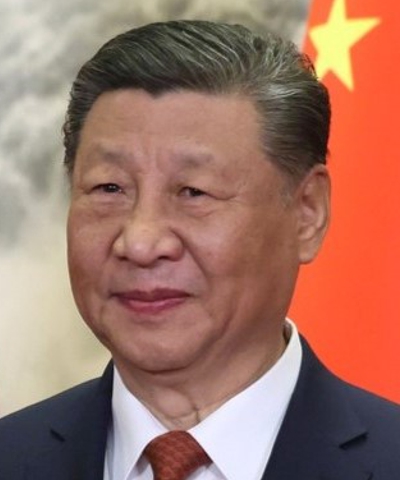
Xi Jinping
President

Li Qiang
Premier

Wang Yi
Minister of Foreign Affairs

Min Aung Hlaing
Chairman of the State Administration Council

Nyo Saw
Prime Minister

Than Swe
Minister of Foreign Affairs


Myanmar's Population Mosaic
Nestled in Southeast Asia, Myanmar's demographics paint a vibrant and complex portrait that reflects its rich cultural tapestry. With over 54 million people, Myanmar's population is young and growing steadily, offering potential for economic growth.

China's Demographic Destiny
As the world’s most populous nation, China stands as a demographic giant with its population numbering over 1.4 billion, a testament to its enduring human civilization.

Myanmar's Trading Prospects
Myanmar's presence in international trade exhibits both opportunities and areas for growth. With its exports focused on sectors such as garments, agriculture, and natural gas, the country's economy is significantly influenced by the trade balance.

China's Dominant Trade Footprint
China's position in global trade is undeniably significant, with its exports accounting for an impressive share of world exports. The country stands at the apex of this trade landscape, serving as the world's leading exporter, dominating the market with a remarkable value of $3.

What's Inside the "China & Myanmar" Report?
Each Bilateral Navigator report is a vital resource for diplomats and business leaders, offering quick insights into a foreign country through comparison with their own. By analyzing 40 key areas, we calculate the similarities between China and Myanmar, covering topics like geography, economy, international relations, and culture. This empowers you to confidently engage in a new country, impressing your hosts with data-driven knowledge while celebrating the bilateral relationship rather than focusing on one country alone.
1. Geopolitical Context: Compare the geography, demographics, and transport systems of Chinese and Burmese regions to uncover strategic advantages and shared interests.
2. Economic Synergy: Explore China and Myanmar's economic outputs, trade relations, investments, and tourism flows, highlighting complementary strengths.
3. Green Partnership: Examine how the countries align in agricultural practices, energy production, and environmental policies, advancing sustainability together.
4. Human Empowerment: Analyze the healthcare and education systems of both China and Myanmar, along with social equity and gender balance efforts, spotlighting progress in human development.
5. Innovation Nexus: Explore high-tech sectors, shared skills, and educational exchanges between Chinese and Bamar, showcasing their roles in global innovation.
6. Political Landscape: Discover the governance structures, historical leadership trends, and security policies of China and Myanmar, shedding light on their political paths.
7. Diplomatic Cooperation: Review the diplomatic network between China and Myanmar, their multilateral treaties, and how closely they align in UN voting patterns, providing insight into their international relations.
8. Business Networking: Understand the professional exchanges and key industries that connect Chinese and Burmese business communities, identifying opportunities for collaboration.
9. Communication & Media: Compare China and Myanmar's media landscapes, including telecom, social media engagement, and notable public figures historically or contemporarily connecting the two countries.
10. Shared Passions: From cultural heritage to sports achievements and cuisine, explore the cultural elements that bring Chinese and Bamar together, highlighting areas of shared interest and enjoyment.