
Austria & Myanmar
The Ultimate Resource
for Diplomats and Business Leaders

Bilateral Similarity Index BSX:
48.7%

Ever wonder if Austria and Myanmar show strongest alignment in energy schemes?
Our in-depth study covers 40 areas, beautifully presented in a 300-page, full-color hardcover format!

Geography of Austria: A Bridge between East and West
Austria's geography plays a pivotal role in its history and culture, shaping a nation that serves as a bridge between Eastern and Western Europe. Despite its relatively modest size, Austria's topography exhibits striking diversity, characterized by three major regions.

Geographical Features of Myanmar
Nestled at the heart of Southeast Asia, Myanmar stands out for its striking natural tapestry, occupying the 39th position globally in terms of landmass at 652,670 square kilometers. The nation boasts a remarkable position between the Bay of Bengal and the Andaman Sea, which has gifted it with the 20th longest coastline globally, stretching an impressive 1,4708 kilometers.

Austria's Economic Prowess
Austria stands as an economic powerhouse, its GDP ranking 44th globally and boasting impressive per capita GDP and income levels. This solid foundation is bolstered by an enviable combination of highly rated credit scores, signaling a stable and trusted economy.

Myanmar: Economic Resilience
Myanmar's economy exhibits notable resilience and long-term growth potential, despite facing recent challenges. Its large GDP and GDP per capita in purchasing power parity (PPP) terms reflect the country's fundamental economic size and population.

Leadership Timeline


Alexander Van der Bellen
President

Christian Stocker
Chancellor

Beate Meinl-Reisinger
Minister of Foreign Affairs
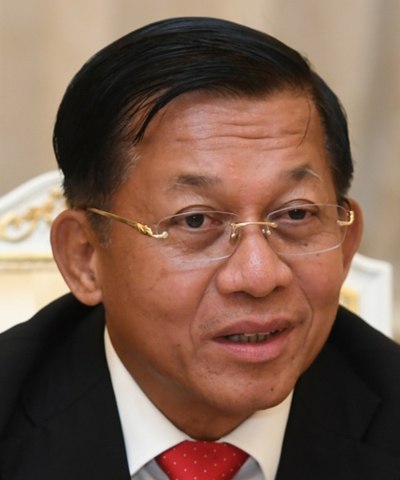
Min Aung Hlaing
Chairman of the State Administration Council

Nyo Saw
Prime Minister

Than Swe
Minister of Foreign Affairs


Myanmar's Population Mosaic
Nestled in Southeast Asia, Myanmar's demographics paint a vibrant and complex portrait that reflects its rich cultural tapestry. With over 54 million people, Myanmar's population is young and growing steadily, offering potential for economic growth.

Austria: Demographics Define Character
Austria’s demographics tell the story of a stable, aging population with cultural diversity and global reach. The population is predominantly German-speaking and enjoys a high literacy rate, underpinning the nation’s strong educational system that emphasizes quality and a highly trained workforce.

Myanmar's Trading Prospects
Myanmar's presence in international trade exhibits both opportunities and areas for growth. With its exports focused on sectors such as garments, agriculture, and natural gas, the country's economy is significantly influenced by the trade balance.

Austria: Trade Hub in Europe
Austria boasts a balanced and vibrant trade landscape, reflected in its notable exports and imports that play a key role in the country's economic growth. With exports contributing significantly to its GDP, Austria stands as a major exporter on the global stage.

What's Inside the "Austria & Myanmar" Report?
Each Bilateral Navigator report is a vital resource for diplomats and business leaders, offering quick insights into a foreign country through comparison with their own. By analyzing 40 key areas, we calculate the similarities between Austria and Myanmar, covering topics like geography, economy, international relations, and culture. This empowers you to confidently engage in a new country, impressing your hosts with data-driven knowledge while celebrating the bilateral relationship rather than focusing on one country alone.
1. Geopolitical Context: Compare the geography, demographics, and transport systems of Austrian and Burmese regions to uncover strategic advantages and shared interests.
2. Economic Synergy: Explore Austria and Myanmar's economic outputs, trade relations, investments, and tourism flows, highlighting complementary strengths.
3. Green Partnership: Examine how the countries align in agricultural practices, energy production, and environmental policies, advancing sustainability together.
4. Human Empowerment: Analyze the healthcare and education systems of both Austria and Myanmar, along with social equity and gender balance efforts, spotlighting progress in human development.
5. Innovation Nexus: Explore high-tech sectors, shared skills, and educational exchanges between Austrians and Bamar, showcasing their roles in global innovation.
6. Political Landscape: Discover the governance structures, historical leadership trends, and security policies of Austria and Myanmar, shedding light on their political paths.
7. Diplomatic Cooperation: Review the diplomatic network between Austria and Myanmar, their multilateral treaties, and how closely they align in UN voting patterns, providing insight into their international relations.
8. Business Networking: Understand the professional exchanges and key industries that connect Austrian and Burmese business communities, identifying opportunities for collaboration.
9. Communication & Media: Compare Austria and Myanmar's media landscapes, including telecom, social media engagement, and notable public figures historically or contemporarily connecting the two countries.
10. Shared Passions: From cultural heritage to sports achievements and cuisine, explore the cultural elements that bring Austrians and Bamar together, highlighting areas of shared interest and enjoyment.